Triptychs
Silver Hallides, Diane Gabriel and Jordan Douglas, Gallery 215, Burlington, Vt. April, 2009
Photographs exist mainly as single frames, within an imposed rectangular boundary. Each frame is both a fragment and a whole. What exists within that defining space becomes a world unto itself, forever detached from its surroundings. Photographs on film are divided by frame lines and ordered in chronological sequence. A contact sheet reveals the negatives as a page of positives—the film’s progressioin strips of five or six images.
Much of what the photographer grapples with is containment—how do we inject the single frame with enough energy to give it voice, to speak aesthetically and/or narratively? What elements must align for the photograph to achieve maximum expression within that selected moment? What happens when several visual moments are offered to be assessed simultaneously?
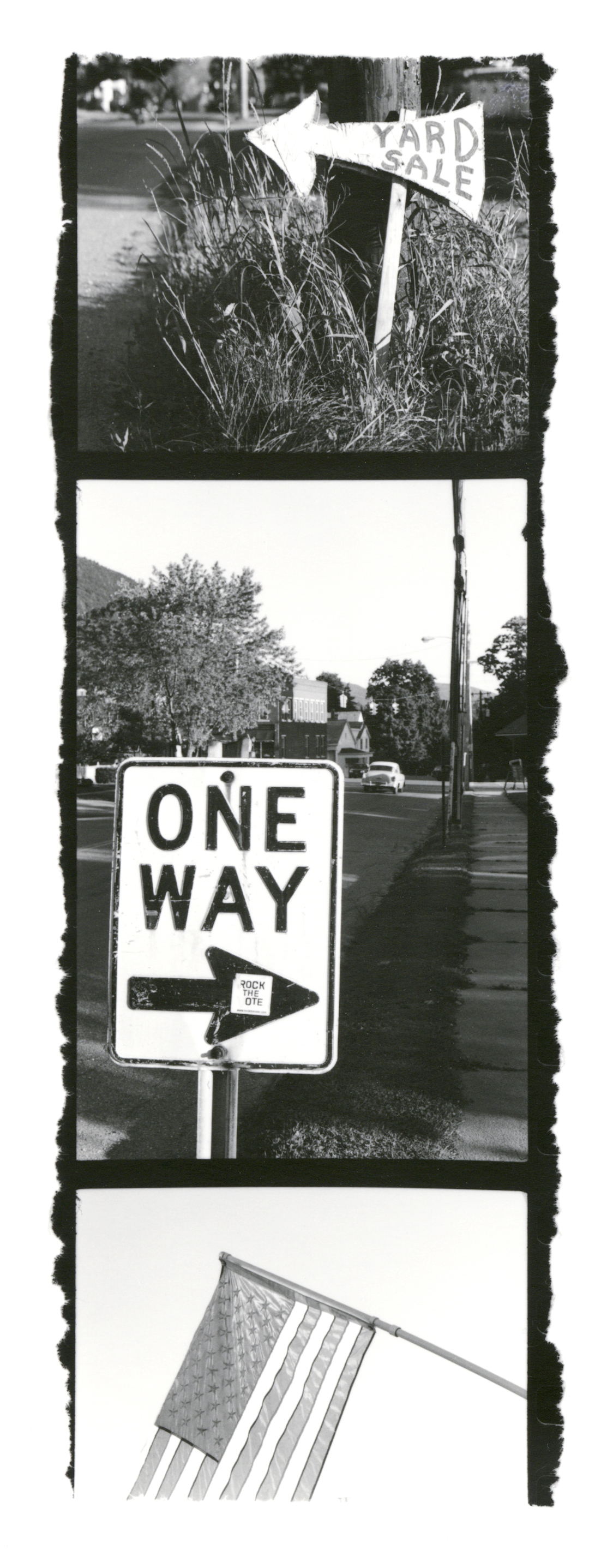
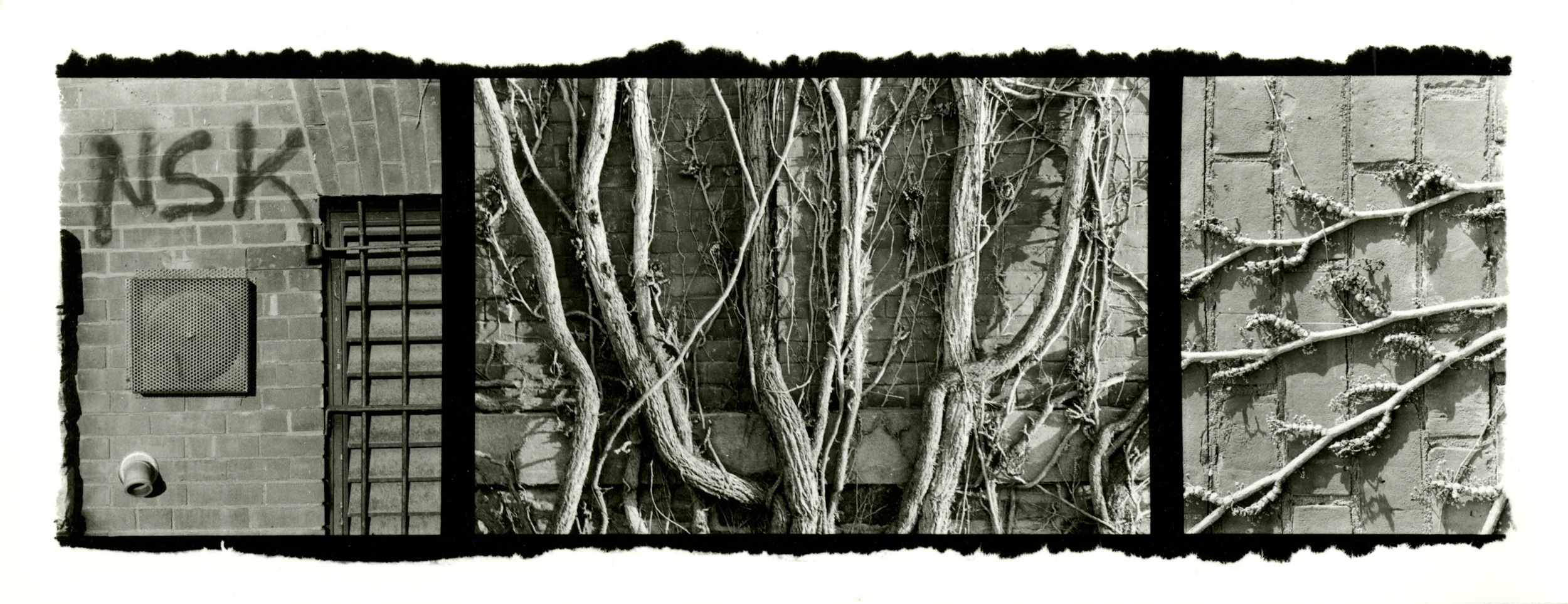
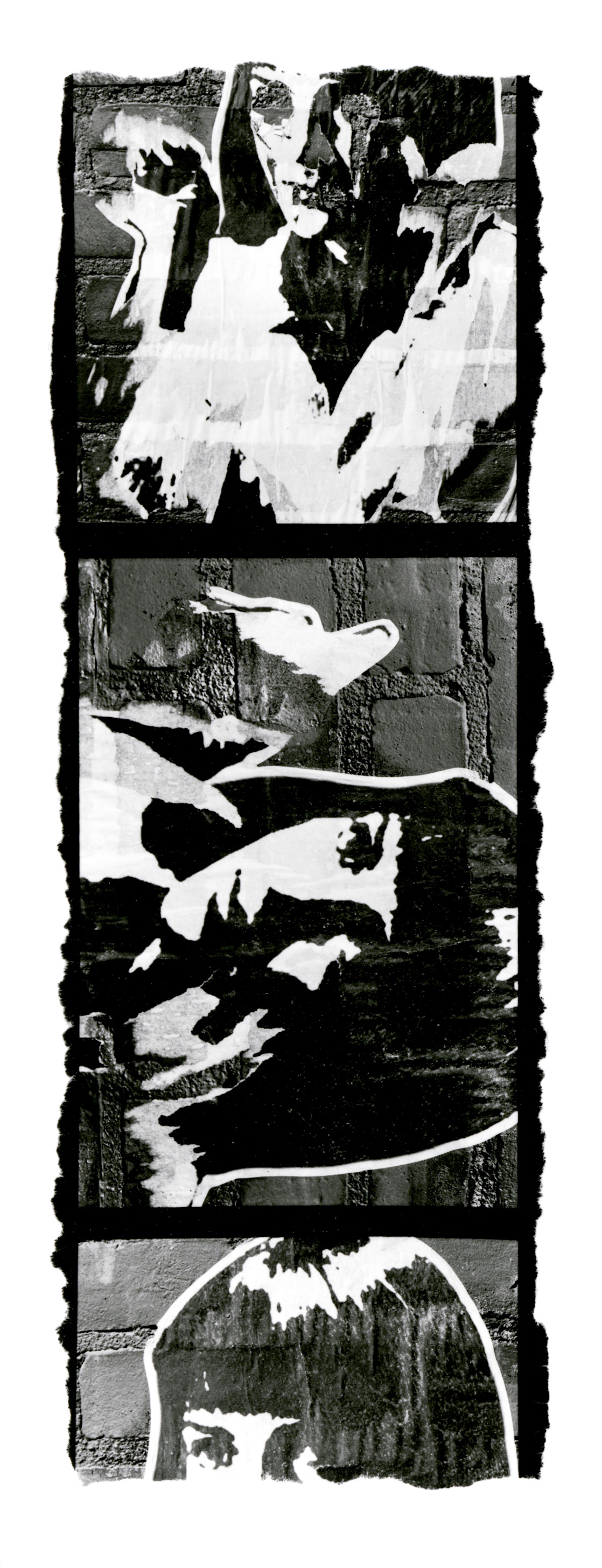
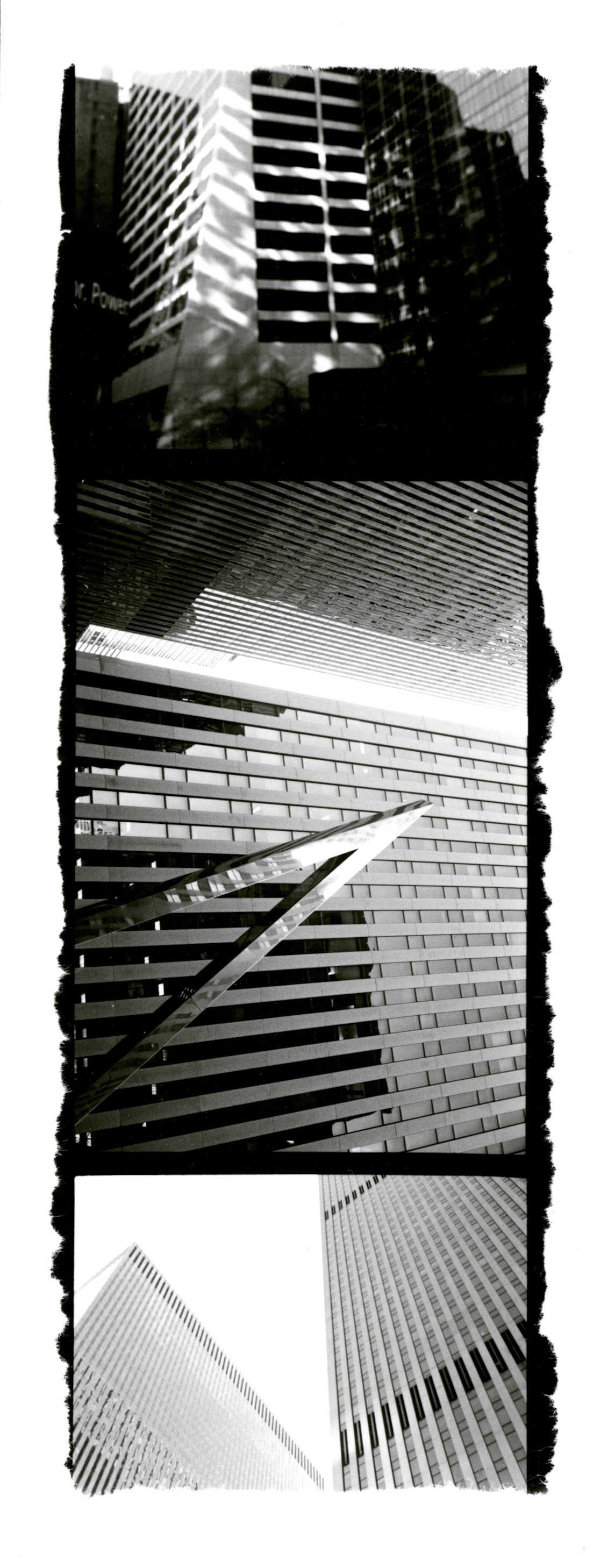
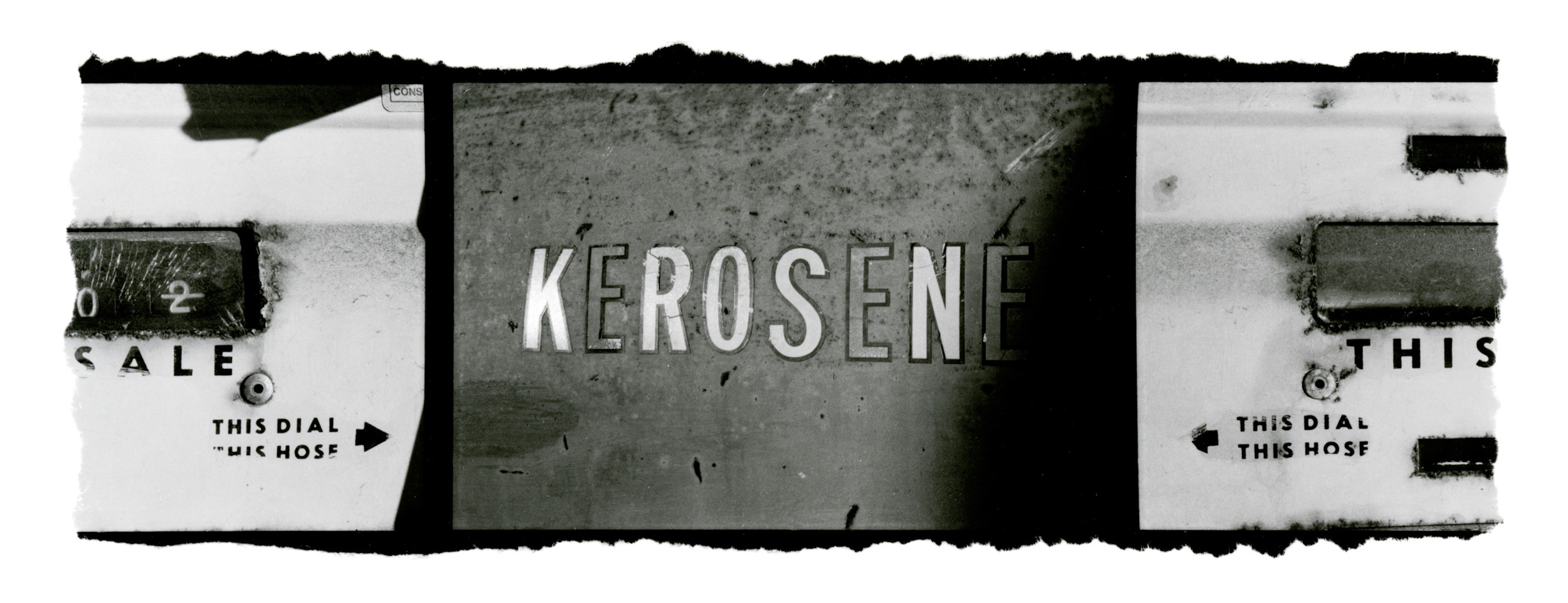
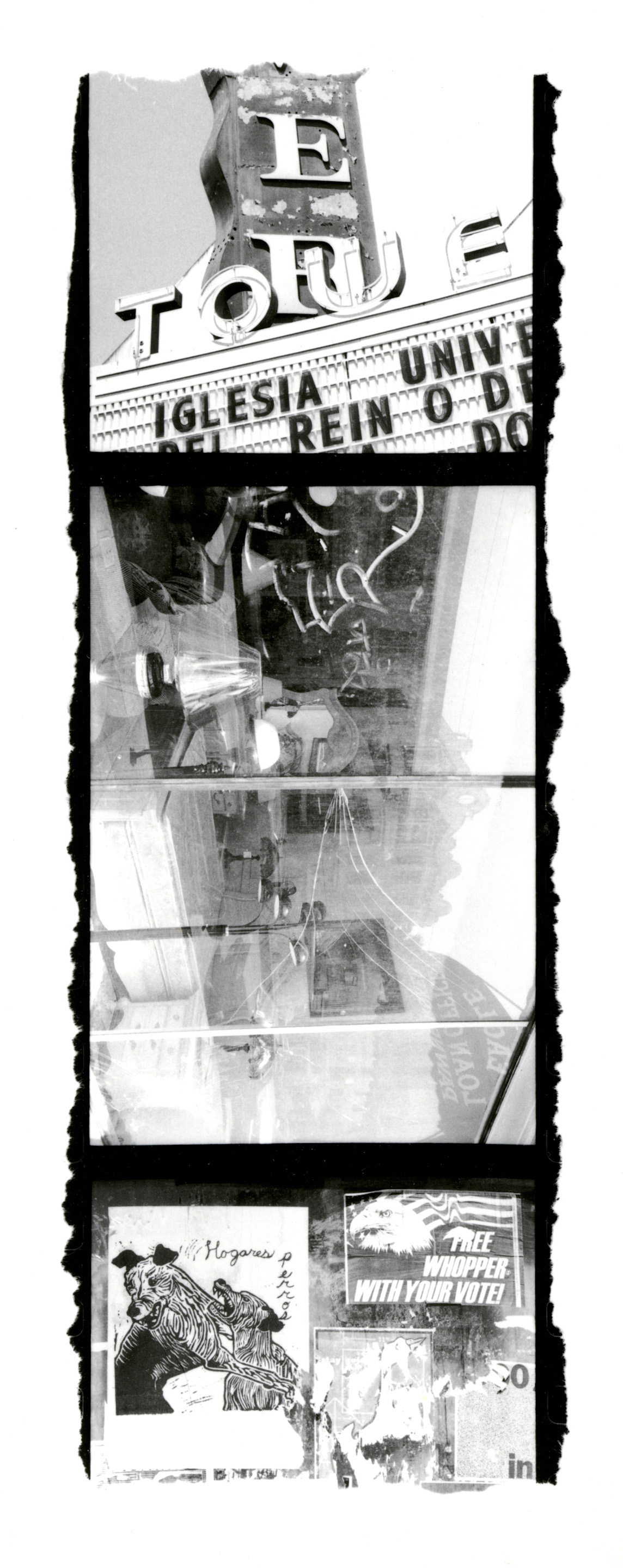
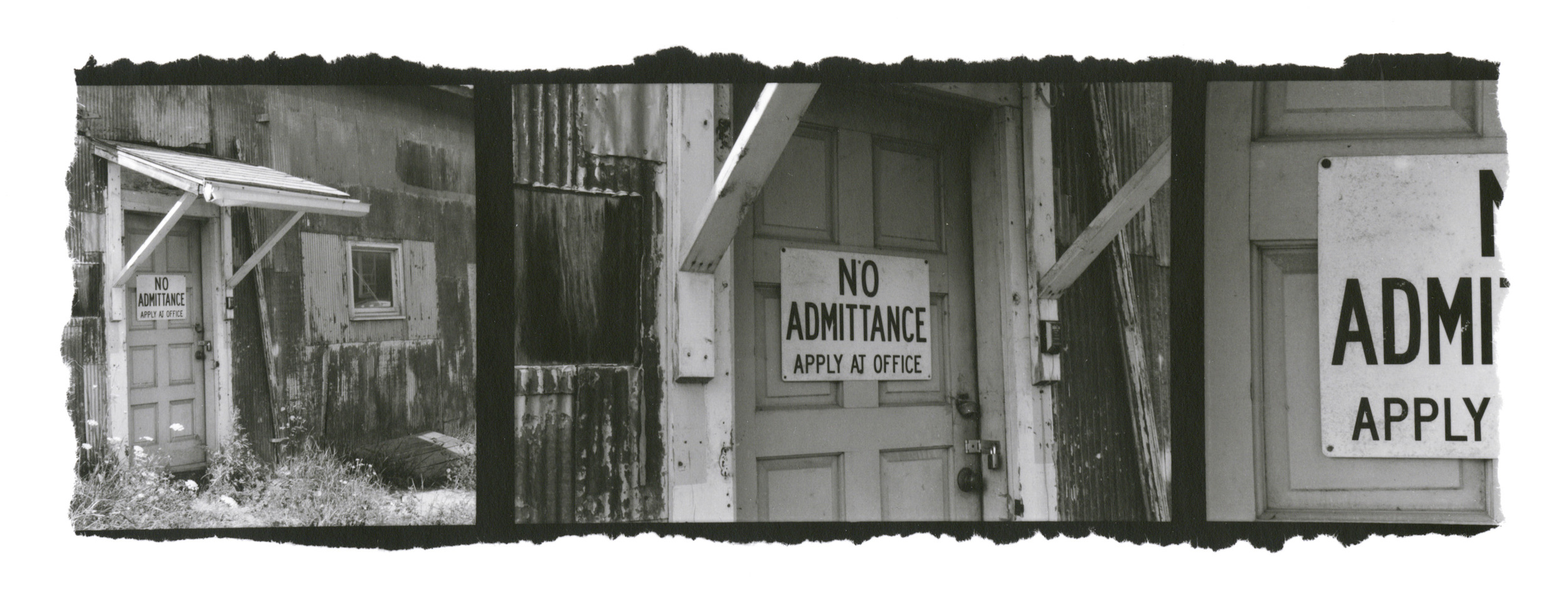
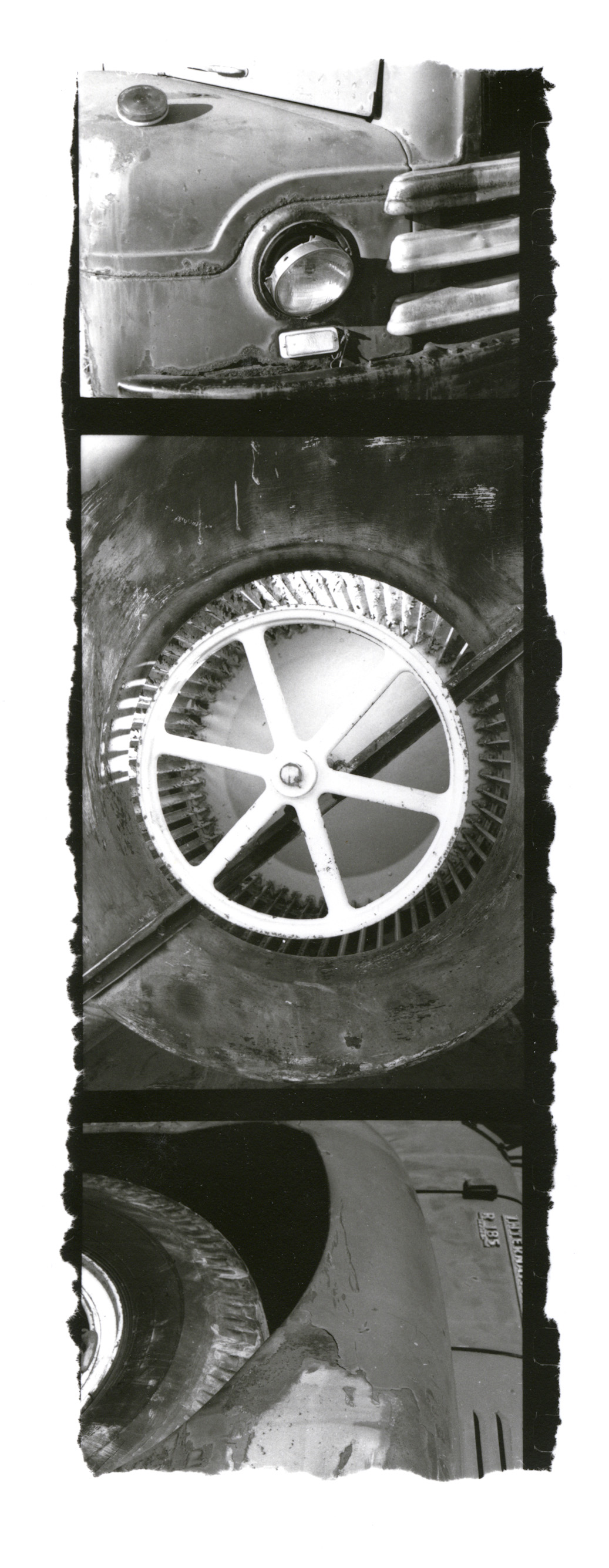
For these Triptychs, I created an enlarging format that allots for three 35mm film frames to be printed together within the space of two frames. A central image is flanked by two partial images. The single frame is extended into a larger time signature as the successive shots reflect a multiplicity of moments: a whole frame, bound within its rectangular capsule, and fragments of the before and after.
The connections across frames are accidental, as the shots were not photographed with sequential printing in mind. I scrutinized thousands of images on contact sheets and only eighteen suitable trios emerged. My criterion was that an aesthetic (and possibly a contextual) relationship would be generated between the often disparate neighboring images—that the pieces coalesce into a larger whole. The dividing frame lines transform into connecting lines, junctures where frames interact. Orientation may shift from horizontal to vertical and subject matter may be closely related or vary widely.
The silver gelatin prints are toned in selenium, and are 8x20 inches in size.